Super Early Deadline
31 August 2026
Judging
Date
22 March 2027
Winners Announcement
22 April 2027
31 August 2026
22 March 2027
22 April 2027
For much of the last two decades, the UK beer conversation has been dominated by two poles: traditional ales on one side and hop-forward craft IPAs on the other. Yet quietly, and now unmistakably, a third force has emerged—European-style, fruit-led beers. These lighter, thirst-quenching styles have evolved into Britain’s fastest-growing beer trend, signalling a deeper structural shift in consumer behaviour.
The numbers tell part of the story. Tesco has reported a staggering 250% year-on-year increase in sales volume for fruit-led beers, while brands such as Jubel have seen growth exceed 300%. But beyond headline growth figures, the real significance lies in why this category is resonating so strongly—and what it reveals about the future direction of the UK beer market.
At the heart of this movement is a recalibration of taste. After years of escalating bitterness, high ABVs, and flavour maximalism driven by the craft boom, a growing cohort of drinkers is gravitating towards balance and refreshment. European fruit-led beers—typically sitting around 4% ABV—offer flavour without fatigue. They are light, crisp, and approachable, designed for multiple servings rather than single-sip contemplation.
This aligns closely with broader moderation trends. UK consumers, particularly those aged 21–35, are increasingly mindful of alcohol intake without wanting to disengage from social drinking altogether. Fruit-led lagers and shandy-style beers fit neatly into this mindset, offering a sense of indulgence without excess.
These styles are far from new. In countries such as Germany, Belgium, France, Spain, and Italy, fruit-accented beers have long been embedded in everyday drinking culture. Radlers in Germany, kriek-style beers in Belgium, and lemon-infused lagers in Spain are associated not with nightlife, but with daytime refreshment—cycling stops, ski chalets, long lunches, and post-sport recovery.
The UK’s adoption of these beers reflects a cultural borrowing rather than a novelty trend. As travel has become more accessible and European food-and-drink rituals more familiar, British consumers are increasingly comfortable embracing styles that prioritise refreshment over strength. In that sense, fruit-led beer feels less like a reinvention and more like a long-overdue correction.
Crucially, these beers are lowering the barrier to entry for beer itself. Fruit-led profiles appeal not only to traditional beer drinkers but also to consumers who might otherwise choose cider, seltzers, or even cocktails. This is particularly significant at a time when beer is competing for relevance among younger drinkers with increasingly fragmented preferences.
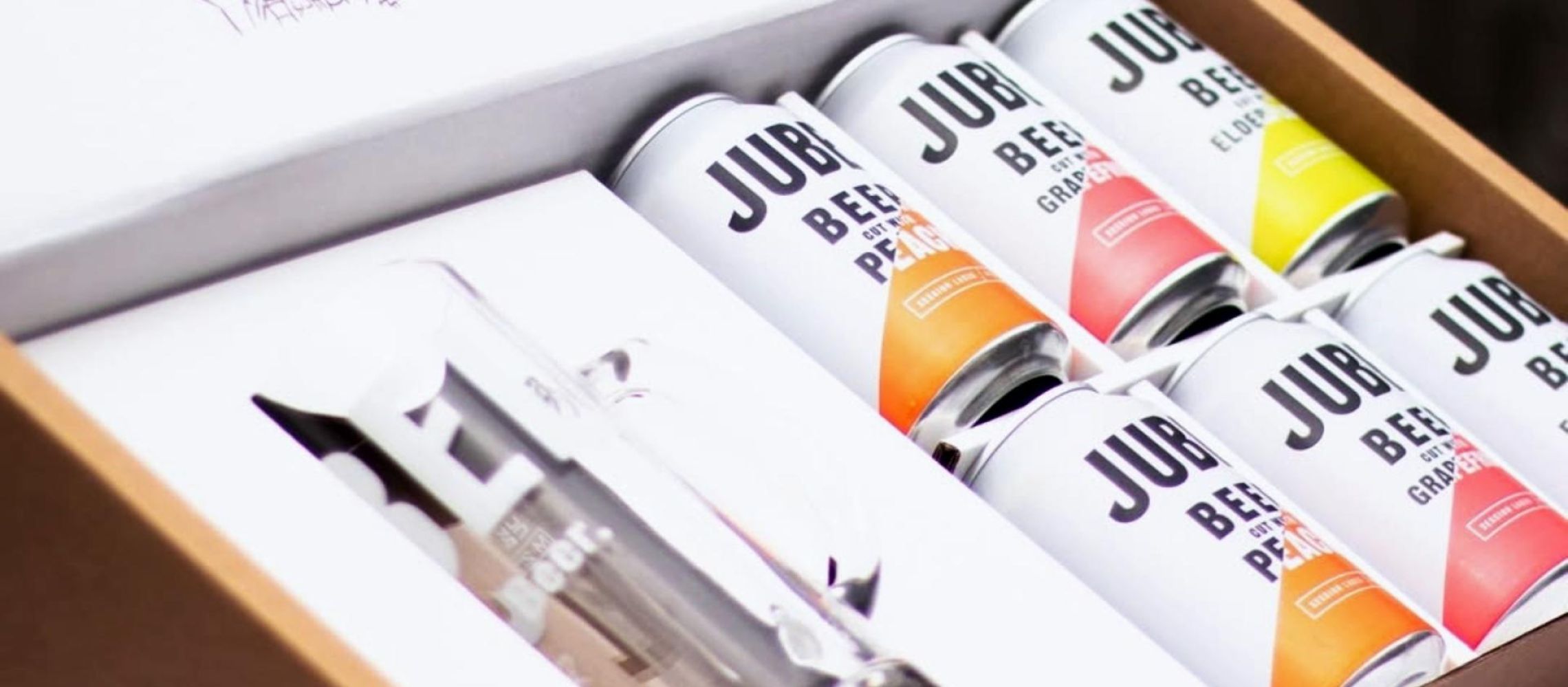
Brands such as Jubel illustrate how European inspiration can be successfully translated for the UK market. Launched seven years ago as a dedicated fruit lager brand, Jubel positioned itself as modern, social, and flavour-forward without leaning into craft beer dogma. Its peach, mango, blood orange, lemon, and grapefruit variants speak directly to contemporary flavour expectations, while the restrained ABV keeps the product firmly sessionable.
Retail performance suggests this trend is not a fleeting summer spike. Sustained growth across multiple SKUs and formats indicates repeat purchasing, not novelty trial. For major retailers like Tesco, rapid range expansion is typically reserved for categories with long-term potential, suggesting fruit-led beer has moved from experimentation into establishment.
From a trade perspective, this opens meaningful opportunities. These beers perform well across multiple occasions: outdoor events, casual dining, post-work drinks, and alcohol-light socialising. They also bridge the gap between beer and alternative categories, making them highly versatile for on- and off-trade operators alike.
Looking ahead, the beer market can definitley expect further exploration of subtle fruit infusions, lower bitterness profiles, and continental-style drinking cues. The UK beer scene is not abandoning complexity. It is redefining it. Complexity is moving away from technical bravado and towards drinkability, context, and cultural relevance. In many ways, this trend reflects a maturing market. British drinkers are no longer asking how extreme beer can be; they are asking how well it fits into their lives. European-style fruit-led beers answer that question with confidence and in doing so, they may well shape the next decade of UK beer consumption.
The pint is getting lighter, but also smarter.
Header image sourced from Jubel (Instagram).
The 2027 London Beer Competition gives every entrant greater feedback, transparency and valuable commercial insight. Entrants will receive an expanded score breakdown, constructive feedback on how to improve their beers, guidance on how to market and sell them, the names of the judges who tasted their entries, final feedback from the Head Judge and a Buyer Market Intelligence Report.
Enter your beers in the 10th edition of the London Beer Competition.